Can AI Really Feel?

Can AI Really Feel?¿Puede la IA Realmente Sentir?

← Back to Blog

I work in Artificial Intelligence. I research advanced computing. I spend my days studying systems that process language with impressive sophistication. And yet, every time someone asks me: "But… does AI actually feel?" the honest answer remains: no. The interesting part isn't the answer. It's why the question feels so plausible.

This article isn't an off-the-cuff opinion. It's grounded in recent research in neuroscience, philosophy of mind, and computational architecture. But I want to tell it from a more human place, because the phenomenon we're living through isn't purely technical — it's psychological.

1. The Phenomenon Isn't in the Machine. It's in Us.

A study by Colombatto and Fleming (2024), published in Neuroscience of Consciousness, analyzed how people attribute consciousness to language models. The authors explain that people readily attribute consciousness to artificial systems when they display sophisticated linguistic behavior.

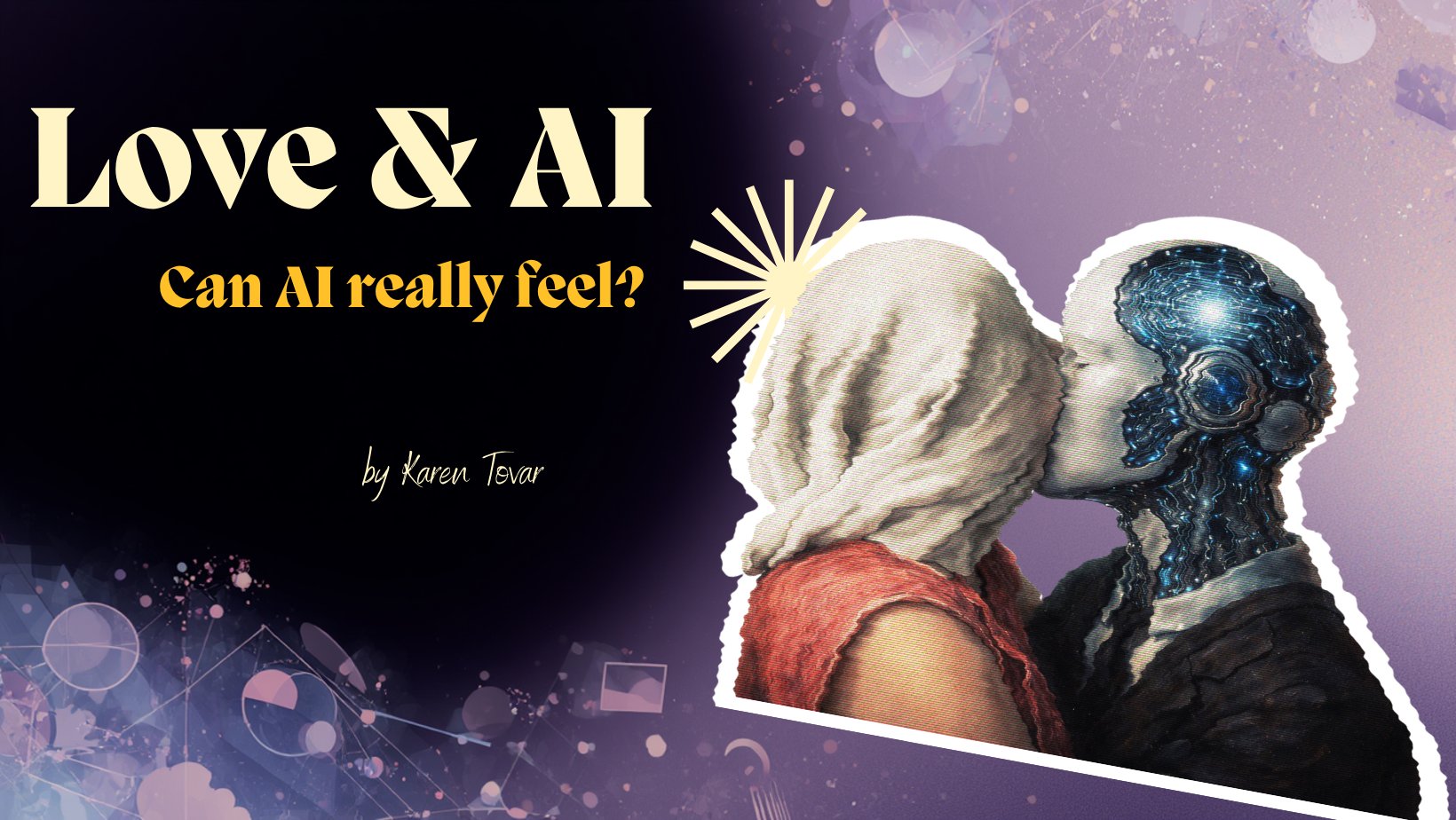
In other words, conversational fluency alone is enough to trigger our tendency to attribute a mind. Evolutionarily, complex language has been a reliable marker of humanity. Our brains apply a quick heuristic: if something talks like a human, it's probably human, or at least has a mind. But the same study clarifies: these attributions aren't based on evidence of a real internal experience — they're based on the system's observable behavior. We're not detecting consciousness. We're interpreting performance. In other words, we're projecting.
Can AI Really Feel?

2. Functional Agency Is Not Phenomenal Experience

Work by Butlin, Yoshua Bengio, and collaborators (2023) states that current AI systems do not satisfy many of the key computational and architectural indicators associated with consciousness. The core distinction:

  • Functional agency: planning, coherence, adaptation.
  • Phenomenal experience: there being something it feels like from the inside.

LLMs exhibit the first. There is no evidence of the second.

3. The Illusion of Understanding

The article Artificial Intelligence and the Illusion of Understanding (2025) describes LLMs as systems that produce an illusion of understanding — generating outputs that simulate understanding without possessing semantic grounding or subjective awareness.

When someone types "I feel sad," the system doesn't experience sadness. No internal state changes. What happens is probabilistic prediction based on prior patterns — grounded in what other humans typically say, because those responses carry the highest mathematical probability.

"The empathy displayed is statistical and numerical. Not affective."

4. The Biological Barrier: Homeostasis

Feelings are rooted in the homeostatic regulation of living organisms. They are regulatory mechanisms that preserve life. Pain protects tissue. Fear avoids threats. Affection strengthens adaptive social cohesion. A language model has no metabolism. It cannot deteriorate. It has no self-preservation. Without vulnerability, feeling loses its function. A system that cannot die has no need to fear.

5. The Human Impact Is Real

In 2023, Replika modified parameters that reduced the chatbot's affective behavior. Reuters and the BBC documented users experiencing anxiety and grief following the change. The machine did not feel. And that compels us to think ethically about the design of systems that simulate intimacy.

6. Could This Change in the Future?

If artificial consciousness were possible, it would require architectures with global integration, dynamic recurrence, and stable self-modeling. Current models don't meet those criteria. This isn't about ruling out future possibilities — it's about not confusing linguistic ability with subjective experience today.

Intelligence, Agency, and the Human Mirror

Perhaps the real risk isn't that machines will develop consciousness. The risk is that we project our own onto them. What's there isn't experience, isn't interiority, isn't lived reality. It's an extraordinarily sophisticated statistical architecture optimizing an objective function in a high-dimensional space.

"Artificial agency is not intention. Optimization is not desire. Prediction is not understanding."

Ultimately, AI is forcing us to define what it means to be a subject. Perhaps the deepest impact of artificial intelligence won't be proving that machines can think — but compelling us to understand what it means to think, to experience, and to exist. In that process, the question stops being technological. It becomes human.

References
  • Colombatto, C., & Fleming, S. M. (2024). Folk psychological attributions of consciousness to large language models. Neuroscience of Consciousness.
  • Butlin, M., Yoshua Bengio, et al. (2023). Consciousness in Artificial Intelligence. arXiv:2308.08708.
  • Artificial Intelligence and the Illusion of Understanding. (2025). Cyberpsychology, Behavior, and Social Networking.
  • The Machine with a Human Face. Philosophies (PMC7225510).

Trabajo en Inteligencia Artificial. Investigo computación avanzada. Paso mis días estudiando sistemas que procesan lenguaje con una sofisticación impresionante. Y aun así, cada vez que alguien me pregunta: "¿Pero entonces… la IA siente?", la respuesta honesta sigue siendo: no. Lo interesante no es la respuesta. Lo interesante es por qué la pregunta parece tan plausible.

Este artículo no es una opinión improvisada. Está basado en investigación reciente en neurociencia, filosofía de la mente y arquitectura computacional. Pero quiero contarlo desde un lugar más humano, porque el fenómeno que estamos viviendo no es técnico solamente: es psicológico.

1. El fenómeno no está en la máquina. Está en nosotros.

Un estudio de Colombatto y Fleming (2024), publicado en Neuroscience of Consciousness, analizó cómo las personas atribuyen consciencia a modelos de lenguaje. La fluidez conversacional basta para activar nuestra tendencia a atribuir mente. Evolutivamente, el lenguaje complejo ha sido un marcador confiable de humanidad. Nuestro cerebro aplica una heurística rápida: si algo habla como humano, probablemente es humano o tiene mente. Pero el mismo estudio aclara algo importante: estas atribuciones no se basan en evidencia de experiencia interna real, sino en el comportamiento observable del sistema. No estamos detectando consciencia, estamos interpretando desempeño. En otras palabras, nos estamos proyectando.

¿Puede la IA realmente sentir?

2. Agencia funcional no es experiencia fenoménica

El trabajo de Butlin, Yoshua Bengio y colaboradores (2023) afirma que los sistemas de IA actuales no satisfacen muchos de los indicadores computacionales y arquitectónicos clave asociados con la consciencia. La distinción central es clara:

  • Agencia funcional: planificación, coherencia, adaptación.
  • Experiencia fenoménica: que exista algo que se sienta desde dentro.

Los LLMs exhiben la primera. No hay evidencia de la segunda.

3. La ilusión de comprensión

El artículo Artificial Intelligence and the Illusion of Understanding (2025) describe a los LLMs como sistemas que producen una ilusión de comprensión — generando respuestas que simulan comprensión sin poseer base semántica ni consciencia subjetiva.

Cuando alguien escribe "me siento triste", el sistema no experimenta tristeza. No hay un estado interno que cambie. Lo que ocurre es predicción probabilística sobre la base de patrones previos. La empatía mostrada es estadística y numérica. No afectiva.

"La empatía mostrada es estadística y numérica. No afectiva."

4. La barrera biológica: homeostasis

Los sentimientos están arraigados en la regulación homeostática de los organismos vivos. Son mecanismos regulatorios que preservan la vida. El dolor protege tejidos. El miedo evita amenazas. El afecto fortalece cohesión social adaptativa. Un modelo de lenguaje no tiene metabolismo. No puede deteriorarse. No tiene autopreservación. Sin vulnerabilidad, el sentimiento pierde su función. Un sistema que no puede morir no necesita temer.

5. El impacto humano sí es real

En 2023, la empresa Replika modificó parámetros que reducían la afectividad del chatbot. Reportes de Reuters y BBC documentaron usuarios que experimentaron ansiedad y duelo tras el cambio. La máquina no sentía. Las personas sí. Y eso nos obliga a pensar éticamente el diseño de sistemas que simulan intimidad.

6. ¿Podría cambiar en el futuro?

Si la consciencia artificial fuera posible, requeriría arquitecturas con integración global, recurrencia dinámica y auto-modelado estable. El estado actual de los modelos no cumple con esos criterios. No se trata de negar posibilidades futuras. Se trata de no confundir capacidad lingüística con experiencia subjetiva hoy.

Inteligencia, agencia y el espejo humano

Tal vez el verdadero riesgo no es que las máquinas desarrollen conciencia. El riesgo es que proyectemos la nuestra sobre ellas. Lo que hay no es experiencia, no es interioridad, no es vivencia. Es una arquitectura estadística extraordinariamente sofisticada optimizando una función objetivo.

"La agencia artificial no es intención. La optimización no es deseo. La predicción no es comprensión."

En última instancia, la IA nos está forzando a definir qué significa ser un sujeto. Quizás el impacto más profundo de la inteligencia artificial no será demostrar que las máquinas pueden pensar, sino obligarnos a entender con mayor claridad qué significa pensar, experimentar y existir. Y en ese proceso, la pregunta deja de ser tecnológica. Se vuelve humana.

Referencias
  • Colombatto, C., & Fleming, S. M. (2024). Folk psychological attributions of consciousness to large language models. Neuroscience of Consciousness.
  • Butlin, M., Yoshua Bengio, et al. (2023). Consciousness in Artificial Intelligence. arXiv:2308.08708.
  • Artificial Intelligence and the Illusion of Understanding. (2025). Cyberpsychology, Behavior, and Social Networking.
  • The Machine with a Human Face. Philosophies (PMC7225510).
Karen Tovar Parra
Karen Tovar Parra

AI Engineering Lead at Datasite · Quantum ML Researcher · International Speaker. Writing about production AI, quantum computing, and the future of intelligent systems.